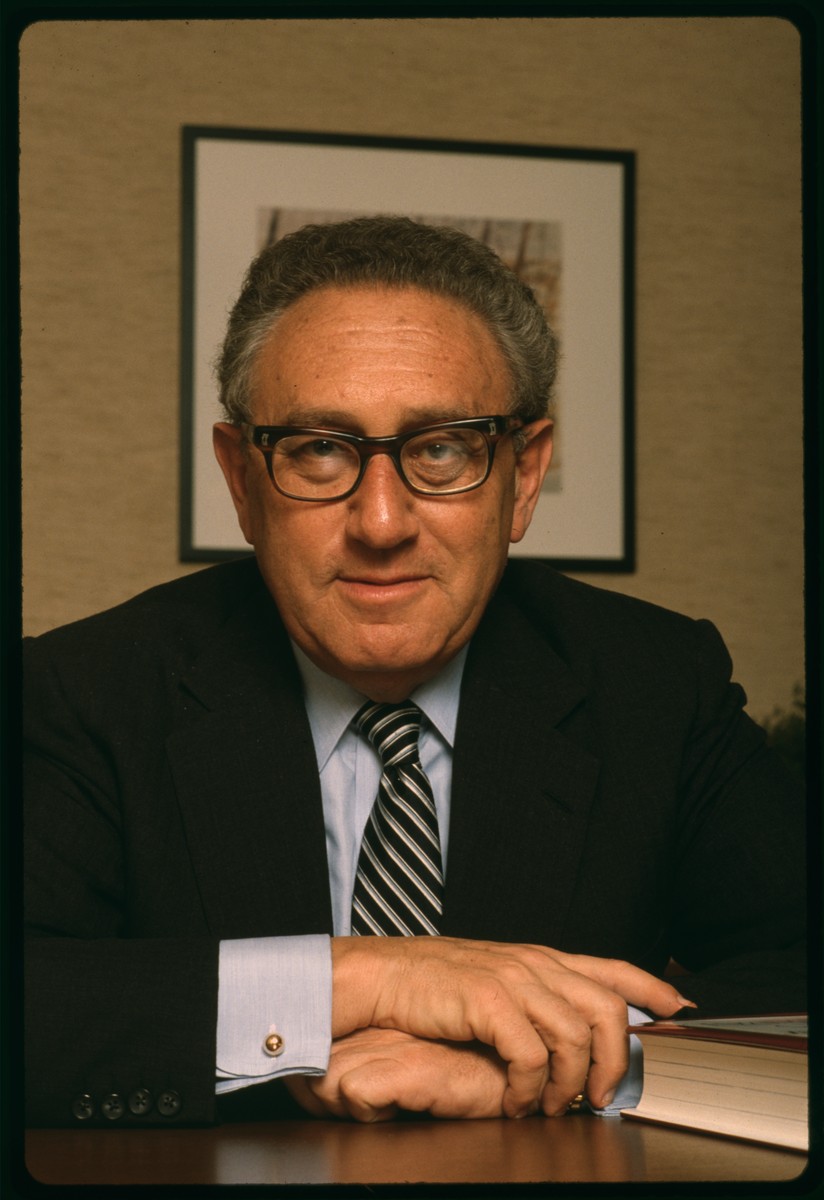
HENRY KISSINGER
- Status
- DECEASED (November 2023) — former US Secretary of State and National Security Advisor; co-author of *The Age of AI* (2021)
- Updated
- Score#273 of 283
- 4
- Ranked
- POWER–REACH–INSULATION–DURABILITY2RATCHET–MONEY –NETWORK 0LULZ –
Behavioral Archetype
In June 2018 Kissinger told readers of The Atlantic: “Aware of my lack of technical competence in this field, I organized a number of informal dialogues on the subject, with the advice and cooperation of acquaintances in technology and the humanities.” At 99 he told CBS: “I am now trying to do what I did with respect to nuclear weapons, to call attention to the importance of the impact of this evolution.” THE REALIST WHO BLESSED THE MACHINE — Subject spent his last years framing artificial intelligence as a question of statecraft, co-writing The Age of AI with Google’s former chief executive Eric Schmidt and MIT’s Daniel Huttenlocher. Every graph node that runs through Kissinger Associates or his network leads back here. This profile scores that position, not the man.
The late work has a start date, and he supplied it. In June 2018 he told readers of The Atlantic that a conference session on artificial intelligence “lay outside my usual concerns—but the beginning of the presentation held me in my seat,” and that, “Aware of my lack of technical competence in this field, I organized a number of informal dialogues on the subject, with the advice and cooperation of acquaintances in technology and the humanities.” (Henry A. Kissinger, “How the Enlightenment Ends”, The Atlantic, June 2018) The acquaintances became co-authors: Schmidt and Huttenlocher on The Age of AI (2021), Schmidt and Craig Mundie on Genesis (2024). The method is the one he used for half a century. Convene the people who hold the capability, write the doctrine with them, and present the doctrine to governments as the frame within which they decide. The hazard is the frame, and the frame outlived him. The man is out of the game; his co-authors are not.
Essence Indicators
- The book. The Age of AI: And Our Human Future, “By Henry A. Kissinger, By Eric Schmidt, By Daniel Huttenlocher,” Little, Brown and Company, November 2, 2021 (Hachette Book Group).
- The adviser. “Until his death in November 2023, he remained in ceaseless demand as an adviser to American presidents and many other world leaders” (Hachette Book Group). See The Manage vs. Build Doctrine.
- The offices. National Security Adviser from January 20, 1969; Secretary of State with entry on duty September 22, 1973, to January 20, 1977, having “Served concurrently as Assistant to the President for National Security Affairs” until November 3, 1975 (US Department of State, Office of the Historian, “Henry A. (Heinz Alfred) Kissinger (1923–2023)”).
- The essay. “How the Enlightenment Ends,” The Atlantic, June 2018 issue, “By Henry A. Kissinger.” His own words, sole byline, and the first statement of the AI doctrine the two books then expanded (The Atlantic).
- The ask. The essay closes on a request to the state: “The U.S. government should consider a presidential commission of eminent thinkers to help develop a national vision. This much is certain: If we do not start this effort soon, before long we shall discover that we started too late.” (The Atlantic, June 2018). The commission Washington actually seated was the National Security Commission on Artificial Intelligence, chaired by his co-author Eric Schmidt, who told the Senate Armed Services Committee on 23 February 2021 that “the threat of Chinese leadership in key technology areas is a national crisis” (Statement of Dr. Eric Schmidt, SASC, 23 Feb 2021). No line of causation is asserted between the essay and the commission; the sequence is the record.
- The second book. Genesis: Artificial Intelligence, Hope, and the Human Spirit, “By Henry A. Kissinger,” “By Eric Schmidt,” “By Craig Mundie,” foreword by Niall Ferguson, Little, Brown and Company, on sale November 19, 2024 — a year after his death (Hachette Book Group). The publisher’s author note: “Henry A. Kissinger was born in Germany in 1923, served in the U.S. Army during World War II, and taught history and government for two decades at Harvard University before becoming National Security Advisor and Secretary of State in the administrations of Presidents Richard Nixon and Gerald Ford.”
- The firm, in his own byline. On October 13, 2023, six weeks before his death, Foreign Affairs ran “The Path to AI Arms Control: America and China Must Work Together to Avert Catastrophe,” by Henry A. Kissinger and Graham Allison, with the contributor line “HENRY A. KISSINGER is Chairman of Kissinger Associates.” (Foreign Affairs, October 13, 2023). The last AI essay was signed from the consultancy chair. See Kissinger Associates in the graph.
- The channel. On July 20, 2023, at 100, Xi Jinping “met with former U.S. Secretary of State Henry Kissinger at the Diaoyutai State Guesthouse in Beijing” (The State Council of the PRC, “Xi meets with Henry Kissinger”, July 20, 2023). Three months later the arms-control essay asked the same two capitals to manage AI together. The network count puts him at the center for the same reason: 12 institutional edges, the most of any person in the dataset, including both a Chinese state forum (Boao) and a Russian one (Valdai) (Discovered Groupings).
Social Persona / Impression Management
Immediate impression: The historian-statesman who admits the gap. He opens the AI essay with a confession of incompetence and a reading list of friends, which is a better opening than most technologists manage: “AI developers, as inexperienced in politics and philosophy as I am in technology, should ask themselves some of the questions I have raised here in order to build answers into their engineering efforts.” (The Atlantic, June 2018)
Energy: Interrogative, then prescriptive. The 2018 essay is mostly questions — “Do we want children to learn values through discourse with untethered algorithms?” — and ends on a commission. The questions are real. The commission is the reflex.
Impression management strategy: The elder who frames the age. At 99 he told CBS, on camera, “I am now trying to do what I did with respect to nuclear weapons, to call attention to the importance of the impact of this evolution.” (Ted Koppel, “Henry Kissinger on a potential artificial intelligence arms race”, CBS News Sunday Morning, May 7, 2023) The nuclear analogy is the whole move. It lifts AI out of product policy and into arms control, where the only qualified parties are states, their advisers, and the people who already sit at that table. It also answers his critics in advance: the record he chose to cite in the same interview was that “nuclear weapons have not been used for 75 years, nor were they used by any adversary.”
- Social accounts and feeds. Deceased November 29, 2023. No personal account or feed is documented in the sources cited on this page; the institutional records are the Council on Foreign Relations memorial and the Office of the Historian biography (CFR, “In Memoriam: Henry A. Kissinger,” November 29, 2023; Office of the Historian).
Forensic Archetype Comparison
| Pattern | Match Level | Evidence |
|---|---|---|
| The Statesman-Adviser | HIGH | Advised presidents until his death. |
| The AI Grand Strategist | HIGH | Co-authored The Age of AI with Eric Schmidt. |
| The Network Node | HIGH | Kissinger Associates in the revolving-door graph. |
| The Arms Controller | MAXIMUM | His own words: “I am now trying to do what I did with respect to nuclear weapons” (CBS, May 7, 2023); then “The Path to AI Arms Control” (Foreign Affairs, Oct 13, 2023). The deterrence template, re-applied to a new weapon class. |
| The Convener | HIGH | “I organized a number of informal dialogues on the subject” (The Atlantic, June 2018) — the dialogues produced two co-authored books with Google’s former CEO. |
| The Skeptic of Refusals | MODERATE | He doubted the safety layer’s central tool before it had a name: “It may be impossible to temper those mistakes, as researchers in AI often suggest, by including in a program caveats requiring ’ethical’ or ‘reasonable’ outcomes. … Should AI therefore become their arbiter?” (The Atlantic, June 2018). The doubt is in the record; his co-authors went on to fund and build that layer. |
| The Engineer | NONE | “Aware of my lack of technical competence in this field” — his own disclaimer. |
Psychometric Assessment
Big Five (OCEAN): Openness 80, Conscientiousness 85, Extraversion 50, Agreeableness 30, Neuroticism 30 (inferred from the public role only).
| Trait | Score | Evidence |
|---|---|---|
| Openness | 80/100 | Took up a field he called “outside my usual concerns” in his nineties and wrote two books on it (The Atlantic, 2018; Genesis, 2024). The range is wide; the lens — balance, order, great-power management — never changed. |
| Conscientiousness | 85/100 | Sustained output from A World Restored (1957) to a posthumous 2024 book; Secretary of State and National Security Adviser simultaneously for two years (Office of the Historian). |
| Extraversion | 50/100 | The working mode was the small room — dialogues, back channels, the Diaoyutai villa (gov.cn, July 20, 2023) — not the rally. Public when the book needed selling. |
| Agreeableness | 30/100 | Low. Told Koppel’s viewers, of the critics questioning the interview, “Now, the younger generation feels that if they can raise their emotions, they don’t have to think.” (CBS, May 7, 2023) |
| Neuroticism | 30/100 | Low. Answered the “criminality” question at 99 on network television without breaking stride (CBS, May 7, 2023). The alarm in the AI essays is intellectual, not personal. |
Dark Triad (evidence-bound; measures the role, not character): Narcissism 60, Machiavellianism 85 (realpolitik as stated doctrine), Psychopathy 20.
| Trait | Score | Notes |
|---|---|---|
| Narcissism | 60/100 | MODERATE-HIGH. “My experience as a historian and occasional practicing statesman gave me pause” — the essay’s authority is the author’s biography (The Atlantic, 2018). Within range for a man whose name was the firm’s. |
| Machiavellianism | 85/100 | HIGH. Realpolitik as stated doctrine: his first book is a study of equilibrium managed by great powers (Manage vs. Build), and the AI work re-files the technology under that heading — an “arms race” in which “in the previous arms races, you could develop plausible theories about how you might prevail” (CBS, 2023). Observation of the documented doctrine, not a judgment of private character. |
| Psychopathy | 20/100 | LOW. The AI writing is preoccupied with harm, consciousness and “the human condition itself”; the Cold War record is scored in the history books, not here. |
MBTI: INTJ (“The Architect”) — Dominant introverted intuition, auxiliary extraverted thinking. Builds a long-horizon model of the system (the Congress of Vienna, the triangle with Beijing and Moscow, AI as a successor to the Enlightenment) and then designs the institution to hold it. The 2018 essay is the type in miniature: a civilizational model in the first half, a commission in the last paragraph.
Threat Assessment
| Category | Level | Notes |
|---|---|---|
| Physical threat | NONE | Deceased. |
| Institutional threat | NONE | Deceased. The seats passed on: the arms-control essay was signed as “Chairman of Kissinger Associates” (Foreign Affairs, 2023), and the firm and the co-authors remain. Their reach is scored on their own pages (Eric Schmidt), not added to his. |
| Memetic threat | HIGH | His framing of AI as statecraft persists. It persists in specific sentences: AI “deals with ends; it establishes its own objectives”; “We must expect AI to make mistakes faster—and of greater magnitude—than humans do”; the Enlightenment “started with essentially philosophical insights spread by a new technology. Our period is moving in the opposite direction.” (The Atlantic, 2018) And in the frame that does the institutional work: “With the advent of artificial intelligence, forms of warfare are conceivable that could be even more destructive than nuclear weapons” (CBS, Dec 3, 2023). Once AI is a weapon more destructive than the bomb, its governance belongs to the people who governed the bomb. |
| Civilizational threat | LOW | Deceased; the doctrine outlives him. Genesis went on sale a year after his death under three names (Hachette); the living two carry the position forward with capital and seats he no longer holds. LOW for the man, because the man cannot act. |
Books by Henry Kissinger
Alliance Map
| Axis | Tie | Since | Source |
|---|---|---|---|
| Corporate | Chairman of Kissinger Associates, the contributor line on his last AI essay | Oct 2023 byline | Foreign Affairs |
| Corporate | Co-author with Eric Schmidt and Daniel Huttenlocher, The Age of AI, Little, Brown (2 Nov 2021); with Schmidt and Craig Mundie, Genesis (19 Nov 2024, posthumous) | 2021; 2024 | Hachette; Hachette |
| Movement | Council on Foreign Relations: “joined as a member and research fellow” in 1956, a member of its Board of Directors from 1977 to 1981; the Henry A. Kissinger Chair for U.S. Foreign Policy, established 2000, is named in his honor | 1956 to 2023 | CFR memorial; CFR chair page |
| Agency | National Security Adviser from 20 Jan 1969; Secretary of State from 22 Sep 1973 to 20 Jan 1977; held both until 3 Nov 1975 | 1969 to 1977 | Office of the Historian |
| Agency | Member of the Defense Policy Board until a November 2020 directive removed eleven advisers, “including former Secretaries of State Henry Kissinger” and Madeleine Albright | Removed 25 Nov 2020 | Foreign Policy |
| Legal | Petitioner in Kissinger v. Reporters Committee for Freedom of the Press, 445 U.S. 136, decided 3 March 1980, over the telephone notes his secretaries kept; the Court held the State Department had not “withheld” agency records under FOIA because it had neither custody nor control of the notes when the requests arrived | 1980 | Cornell LII |
| Diaspora | Committee of 100: “Former Secretary of State Dr. Henry Kissinger urged Pei to act” after the 1989 Tiananmen crackdown; the organization was founded by Yo-Yo Ma, I.M. Pei, Henry S. Tang, Oscar Tang, Chien-Shiung Wu and Shirley Young. He is not listed as a founder | 1989 | Committee of 100 |
| Diaspora | Meetings with foreign governments and forums, none a role: Xi Jinping met him at the Diaoyutai State Guesthouse on 20 July 2023; members of the Valdai International Discussion Club and RIAC met him in Moscow on 3 February 2016. | 2016; 2023 | State Council of the PRC; RIAC |
In 2023 the Corporate seat (Kissinger Associates), the Movement seat (a CFR member since 1956) and the Beijing meeting ran concurrently, in the year of the arms-control essay addressed to Washington and Beijing. The overlap is the finding; the record shows the meetings and the byline, not an arrangement.
Alignment Analysis
Stated alignment: Order and balance among great powers. Observed alignment: Consistent. Gap assessment: Put AI into the realist frame, where it now sits in policy.
The stated alignment on AI is in his own hand and is humanist before it is strategic. The national priority he asked for was “above all, from the point of view of relating AI to humanistic traditions,” and the commission he proposed was “of eminent thinkers” (The Atlantic, June 2018). He even saw the gap coming: “governance, insofar as it deals with the subject, is more likely to investigate AI’s applications for security and intelligence than to explore the transformation of the human condition that it has begun to produce.”
The observed alignment is the one he predicted for governance. The commission that arrived was a national-security commission chaired by his co-author (Schmidt, SASC, 2021); his own last interventions were an arms-race interview (CBS, May 2023) and an arms-control essay addressed to Washington and Beijing (Foreign Affairs, Oct 2023). The humanist question ended up inside a security frame, which is the realist frame, which is consistent.
The sharpest line in the record cuts against the apparatus this site maps. In 2018 he asked what could have helped the Tay chatbot “define for itself offensive, a word upon whose meaning humans do not universally agree?”, and whether, since “Entire academic disciplines have arisen out of humanity’s inability to agree upon how to define these terms,” AI should “therefore become their arbiter?” That is the refusal layer’s founding problem, stated by a realist before the layer was built. He also described the business model of his future co-author’s former company without naming it: “search-engine algorithms acquire the capacity to predict the preferences of individual clients, enabling the algorithms to personalize results and make them available to other parties for political or commercial purposes. Truth becomes relative.” What the record cannot settle is whether the books with Schmidt carried that skepticism into the institutions or traded it for the seat. For a deceased subject it no longer needs to; the co-authors’ pages carry the answer.
Convergent Drive Classification
Self-preservation: Influence for half a century. The last AI essay ran six weeks before his death and the last book a year after it; the byline survived the man (Foreign Affairs, 2023; Genesis, 2024). Goal preservation: Balance of power. The goal never moved; AI was filed under it. “I am now trying to do what I did with respect to nuclear weapons” (CBS, 2023). Resource acquisition: Kissinger Associates. Plus the scarcer resource: co-authors who hold the capability. The dialogues of 2018 became books with Google’s former CEO, MIT’s computing dean and Microsoft’s former chief research and strategy officer. Self-improvement: From academic to statesman to AI theorist. Each step re-used the method from the step before — read the history, model the balance, convene the parties, propose the institution.
Subject is not an AI system. The drives appear anyway. Here they appear in a doctrine that kept acquiring co-authors after its author stopped acquiring anything.
Sources: The Age of AI — Hachette Book Group; Henry A. Kissinger, “How the Enlightenment Ends” — The Atlantic, June 2018; Genesis: Artificial Intelligence, Hope, and the Human Spirit — Little, Brown / Hachette Book Group, 2024; Henry A. Kissinger and Graham Allison, “The Path to AI Arms Control” — Foreign Affairs, October 13, 2023; Ted Koppel, “Henry Kissinger on a potential artificial intelligence arms race” — CBS News, May 7, 2023; Ted Koppel on the complicated legacy of Henry Kissinger — CBS News, December 3, 2023; Office of the Historian — Henry A. Kissinger; Xi meets with Henry Kissinger — The State Council of the PRC, July 20, 2023; Statement of Dr. Eric Schmidt — Senate Armed Services Committee, 23 Feb 2021.
Standing
Each line is the highest step a cited record proves on a fixed ladder. Press and scholarly records count one step lower than first-hand or official ones. More records do not raise a value; only a stronger record does.
- LEVERAGE
- no record yet
- INSULATION
- no record yet
- DURABILITY
- 2
publications only
Co-author of The Age of AI (Little, Brown, 2 Nov 2021). — specialsales.hbgusa.com
, first-hand, 2021-11-02
Next step: a report, standard or program others cite
All 1 record on this line, strongest first
- 2 publications — Co-author of The Age of AI (Little, Brown, 2 Nov 2021). specialsales.hbgusa.com , first-hand, 2021-11-02 (ended)
Graph position
Computed from the ratchet graph and the subject's own words by the tradecraft detector. These are the documented ties behind each pattern, not a score; the graph is incomplete, so absence here proves nothing.
- Where it sits in the network
- A bridge: in the top 8% of the 1,652 mapped for sitting on the paths between others, linking the foreign-policy councils, china-state, finance, russia-state and the think-tank world.
- 12 direct ties: among the most connected 4% of the 1,652 people and bodies mapped.
- Career path and money
- NSC → State Dept → CFR → Bilderberg → Trilateral Comm. → Boao Forum for Asia (china-state) → Tsinghua University (china-state) → China Development Forum (china-state) → Valdai Discussion Club (russia-state) → Chinese Academy of Social Sciences (china-state) → Rockefeller Brothers Fund → Kissinger Associates (12 moves across finance, government and the think-tank world; from a monitoring body into industry; crosses between government and industry).
The score on this file is computed by a published rule from sourced records, the same rule for every file. Nobody types a number: a value moves only when a record does. A dash means no record yet.
Keep reading
- researchDiaspora PACs as Remittance-Economy Political-Influence MechanismsAlso names Oscar Tang.
- researchManage, Don't Solve: The Control Grid's Foreign-Policy GenealogyAlso names World Restored.
- researchWhat the Data Shows — Discovered Groupings in the Ratchet DatasetAlso names Madeleine Albright.
Get updates on the Evil Robots series
Newsletter essays on AI escape, deception, and the humans who built them.